PE Uniform Color and Design Ideas Schools Approve
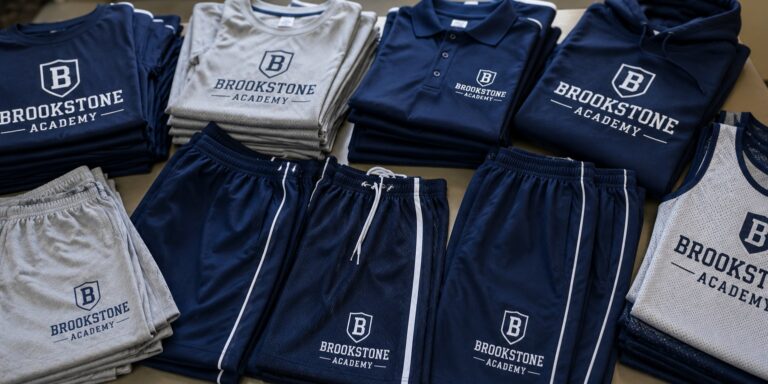
A good PE uniform design balances school pride, practicality, and the approval of parents and administrators. Getting PE uniform design right means a kit that looks sharp, holds up to daily activity, and clears the modesty and cost concerns that decide whether a program gets approved. This guide covers color and design ideas that schools actually sign off on.
The best designs are simple and durable: a clear school identity, sensible colors, and a fit that works for every student. Flash rarely survives the approval meeting; practicality does.
What to put on the uniform
School name leads, followed by a mascot or logo, house or team color-blocking, and optionally the student’s name. The breakdown below shows what most schools include.
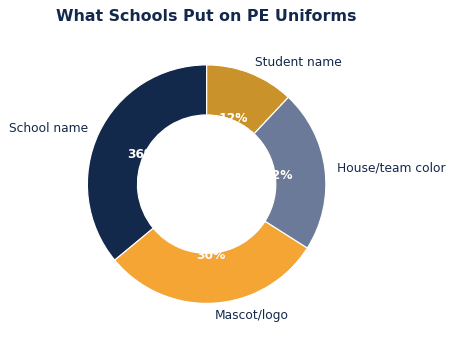
House color-blocking is a popular way to add energy and organize classes into teams without a full custom design per group.
What gets a design approved
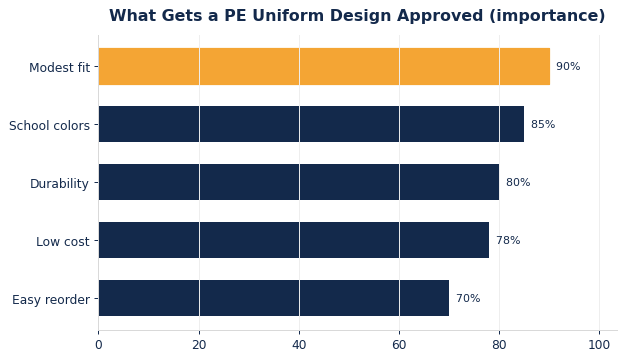
Approval hinges on a modest, comfortable fit, recognizable school colors, durability, reasonable cost, and easy reordering. The importance ranking below reflects what decision-makers weigh.
Colors and layout that work
Stick to one or two school colors with a contrasting logo for legibility. Keep the design consistent across shirts and shorts so the kit reads as a set, and choose a layout that scales cleanly from the smallest youth size to adult.
| Element | Recommendation | Why |
|---|---|---|
| Base color | 1-2 school colors | Recognizable |
| Logo | Contrasting print | Legible |
| House color | Optional accent | Team energy |
Choosing the fabric next? See our companion guide, our Moisture-Wicking PE Uniforms: Fabric Tech for Active Kids. Explore our custom PE uniforms or contact us.
Balancing school pride with practicality
The strongest PE uniform designs satisfy two audiences at once: students who want to feel good in the kit and administrators who need it to be practical and appropriate. A clear school identity — name, mascot, and colors — builds pride and belonging, while a modest, comfortable fit and durable construction address the concerns that decide whether a program gets approved. Designs that chase flash rarely survive the approval meeting; designs that look sharp and hold up do.
Practicality also means thinking about the realities of a PE class. Uniforms get worn hard, washed often, and handed down or reordered as students grow, so a design that scales cleanly across youth-to-adult sizes and reproduces consistently is far more useful than an intricate one that only looks right in one size. Keeping the core design simple and durable is what makes it work for the whole program, not just the mockup.
Color-blocking, houses, and team organization
Color is a practical tool as much as a style choice in a PE program. House or team color-blocking lets a teacher split a class into groups at a glance, adds energy without a full custom design per group, and reinforces school spirit. Assigning each house a color and keeping the base uniform consistent gives you an organizational system built into the kit, which is useful for rotations, competitions, and quickly spotting who belongs where on a busy field.
Coordinating those colors with your school identity keeps the look cohesive. Sticking to one or two primary school colors with a contrasting logo for legibility, then using house accents within that palette, avoids a chaotic mix while still distinguishing groups. This kind of disciplined color plan reads as intentional and is easy to reproduce across shirts and shorts as a matching set.
Getting a design approved and reordered
A design that clears the approval meeting shares a few traits: a modest and comfortable fit, recognizable school colors, durable construction, a reasonable cost, and an easy reorder path. Bringing a simple single-color base with a printed logo to the meeting is the fastest route to a yes, since it is affordable and uncontroversial, and you can layer in house colors later once the program is running. Framing the uniform around these priorities keeps decision-makers on board.
Reorderability matters as much as the initial approval, because programs live for years and students cycle through sizes. Choosing a design and supplier that make it simple to reorder the same kit — same colors, same logo placement, same size range — keeps every student in the correct, consistent uniform without redesigning each season. Keeping the approved artwork on file turns each year’s restock into a simple repeat.
Decoration methods and durability
How a PE uniform is decorated affects how long it looks good through daily wear and washing. Screen printing is economical and vivid for large orders, heat transfer suits detailed or multi-color logos on smaller runs, and embroidery is the most durable and premium for a logo that will not crack or fade. Because gym kits are washed constantly, choosing a decoration method rated for frequent laundering prevents the logo from peeling long before the fabric wears out.
Placement matters for durability too. Keeping the logo in a stable area — the chest or an upper back panel — away from high-flex zones helps it survive stretching and abrasion during activity. A design that reproduces cleanly at the smallest youth size and the largest adult size ensures the whole program looks consistent, so specifying placement and decoration method with the size range in mind pays off across the order.
Durability of the garment itself rounds out the picture. Reinforced seams, colorfast fabric, and a construction built for movement keep the uniform serviceable through a full season and into hand-me-downs or reorders. Pairing a durable decoration method with a durable garment is what keeps a program looking sharp year after year rather than tired by midterm.
Common questions about PE uniform design
What gets a PE uniform design approved?
Approval hinges on a modest, comfortable fit, recognizable school colors, durability, reasonable cost, and easy reordering. A simple single-color base with a printed logo is the easiest design to get signed off, with house colors added later once the program runs.
What should go on a PE uniform?
Lead with the school name and a mascot or logo, optionally adding house or team color-blocking and the student’s name. Keep it to one or two school colors with a contrasting logo for legibility, and keep the design consistent across shirts and shorts.
How do house colors help in PE class?
House or team color-blocking lets a teacher split a class into groups at a glance, adds energy, and reinforces school spirit without a full custom design per group. Coordinating house accents within the school palette keeps the look cohesive.
How do I keep uniforms consistent year to year?
Choose a design and supplier that make reordering the same kit simple — same colors, logo placement, and size range — and keep the approved artwork on file. That turns each season’s restock into a repeat and keeps every student in a consistent uniform.
Designing a PE uniform program?
We’ll help you land a design that looks great and clears approval.
Get a Quote