Custom PE Uniforms: Pricing, MOQs & Lead Times (2026)
Custom PE uniforms are one of the few school purchases where the number on a vendor’s homepage rarely matches what lands on the actual invoice. Fabric weight, minimum order quantity, decoration method, and how many sizes you need to mix into one order all move the per-unit price — sometimes by two or three dollars a set. If you’re budgeting for a physical education program, whether it’s one middle school or a multi-campus district, it helps to know what suppliers are actually charging and requiring before you request a quote.
This guide pulls current pricing and MOQ data from active PE uniform suppliers, breaks down which fabric specs matter for a garment that gets washed weekly for two years, and covers how production timelines shift between standard and rush orders. None of it replaces a formal quote, but it should keep you from being surprised by either number.
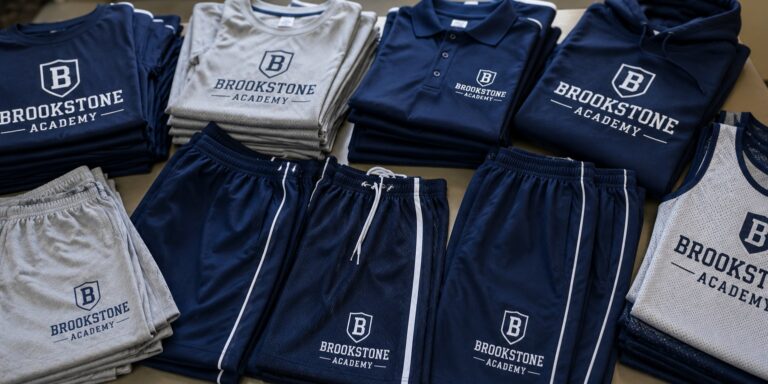
Source: MAVYQ, “School PE Uniforms Wholesale,” mavyq.com/products/jerseys/school-pe-uniforms, accessed August 2026
What custom PE uniforms actually cost
Pricing for custom PE uniforms is quoted per set — typically a jersey or tee paired with shorts — and moves in fairly wide bands depending on volume and decoration. At the lower end, wholesale suppliers advertise sets starting around $6.80 when a school commits to a 150-set minimum order in matching colors. That figure is a floor: it assumes basic screen printing or a single logo placement, standard sizing, and no rush fees.
Smaller programs that can’t hit a 150-unit MOQ aren’t shut out. Some suppliers set minimums as low as 24 garments per style and color combination, with bulk discount tiers starting around 25 units and better pricing kicking in as volume climbs toward 100 or 500 units. If you’re outfitting a single grade level rather than an entire school, ask specifically about per-style MOQs rather than assuming a supplier’s headline minimum applies to your whole order.
The table below lines up starting price and MOQ across a few PE and school-uniform suppliers so you can see where the thresholds actually sit.
| Supplier | Starting Price | MOQ | Notes |
|---|---|---|---|
| MAVYQ | $6.80/set | 150 sets | Jersey + shorts, 160 GSM polyester, sizing 3XS-3XL |
| Custom PE Uniforms | Quote-based | 24 garments/style | Bulk tiers begin at 25 units; price-match guarantee vs. U.S. school suppliers |
| Affordable Uniforms Online | Quote-based | 50 pieces | School/league discount purchase program |
| French Toast | Quote-based | 200 units (300 if decorated) | Higher minimum applies once embroidery or heat-transfer is added |
Minimum order quantities, and how to work around them
MOQs on custom PE uniforms are almost always set per style and color, not per order as a whole. That distinction matters more than most buyers realize once they start budgeting.
Single-school orders vs. district-wide buys
A single school ordering one uniform style in one school color can usually clear a low-volume supplier’s MOQ — 24 to 50 pieces — without much trouble, even for a small PE department. Where MOQs bite is when a district wants two campuses in different color combinations, or when the uniform pairs a jersey in the school color with shorts in a contrasting trim. Each style-and-color combination is typically counted separately against the minimum, so a two-color program can effectively double the units you need to commit to before pricing improves. Ask your supplier to confirm whether jersey and shorts count as one combined MOQ or two separate ones before finalizing a design.
Mixing sizes within one MOQ
Size mixing is usually not a problem — suppliers expect a PE order to span youth small through adult 2XL or 3XL in a single run, and standard size curves are built into their production process. What does add cost is a heavily skewed curve: if most of an order falls into just one or two sizes, or you need extended sizing outside a standard range, some suppliers apply a small surcharge or ask you to round up to the next cutting quantity for that size. Get actual roster size counts before submitting a purchase order rather than estimating — a lopsided size distribution is one of the most common reasons a quote comes back higher than the advertised starting price.
Fabric and material specs worth checking before you sign off
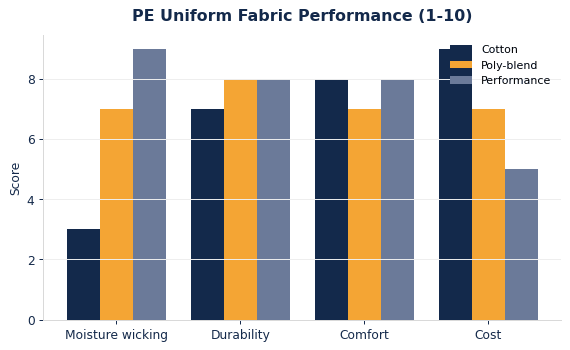
Most custom PE uniforms are built from 100% polyester or a cotton-poly blend, and the choice affects both cost and how the garment holds up to twice-weekly gym-class laundering. All-polyester mesh is the more common choice specifically for PE because it’s the most durable option at the lowest cost and dries fast enough to go from locker room to next period without staying damp. Cotton-poly blends feel softer against skin but hold moisture longer and tend to show wear sooner under a school laundering schedule.
Fabric weight is usually described in GSM (grams per square meter) for jerseys and ounces per square yard for shorts. A mid-weight 160 GSM polyester is a common baseline for PE tops sold as built to last two full academic years of weekly washing, and shorts are commonly specified with a heavier mesh shell layered over a lighter wicking lining. If a supplier won’t state a GSM or ounce weight for the specific fabric they’re quoting, ask — “moisture-wicking polyester” by itself doesn’t tell you whether the garment is built for daily gym class or a one-season event tee.
Lead times: standard production vs. rush orders
Turnaround for custom PE uniforms depends heavily on decoration method and whether the supplier holds blank inventory domestically or cuts and sews to order overseas. Suppliers working from stocked blanks with local screen printing or embroidery commonly quote standard production in the 10-14 business day range after art approval, plus a few more days for shipping. Overseas manufacturers cutting and sewing fully custom garments from scratch — common for full custom jersey programs rather than decorated blanks — often run closer to three to four weeks total.
Rush service exists at most suppliers but comes at a cost: expect a percentage surcharge on top of the unit price, with expedited turnaround landing anywhere from five to ten business days depending on order size and how much of that window is eaten by shipping rather than production. The safest way to avoid a rush fee altogether is to build in the supplier’s stated standard lead time plus a buffer week, and submit final artwork and size counts as one complete package rather than in rounds — incomplete submissions are one of the most common reasons a “standard” order slips into rush territory by default.
Getting the order right the first time
The programs that avoid mid-order surprises tend to do the same handful of things before they request a final quote: confirm whether jersey and shorts count as one MOQ or two, get exact roster size counts instead of estimates, ask for the fabric’s actual GSM or ounce weight in writing, and lock in a production timeline with a written rush-fee policy attached. None of that adds time to the process — it just moves questions that would otherwise surface after the deposit is paid to before it.
It’s also worth asking a new supplier for a physical sample or swatch before committing to a full run, especially if a quoted price is meaningfully below what competitors are charging for a similar spec. A jersey-and-shorts set priced well under the going rate for its stated GSM and MOQ is usually cutting a corner somewhere — often in fabric weight, stitching, or print durability — and that’s a harder thing to catch from a quote sheet than from a sample in hand.
Frequently asked questions
What’s the minimum order quantity for custom PE uniforms?
MOQs vary by supplier and are usually set per style and color rather than per order. Some suppliers accept as few as 24-50 garments in a single style and color, while others require 150-300 units, especially once embroidery or heat-transfer decoration is added. Confirm whether a jersey-and-shorts set counts as one MOQ or two before finalizing your design.
How much do custom PE uniforms cost per set?
Starting prices for a jersey-and-shorts set run from roughly $6.80 at high-volume tiers (150+ sets) up to several dollars more per set for smaller orders, added decoration, or extended sizing. Most suppliers quote per set rather than publishing a flat rate, since volume, fabric weight, and print complexity all affect the final price.
How long does production take for a custom PE uniform order?
Standard production commonly runs 10-14 business days after art approval for suppliers working from stocked blanks, plus shipping time. Fully custom cut-and-sew programs made overseas often take three to four weeks total. Rush service is usually available for an added fee, cutting turnaround to as little as five to ten business days.
What fabric is best for school PE uniforms?
All-polyester mesh is the most common choice because it’s durable, dries quickly between classes, and holds up to weekly washing across a full school year. A mid-weight fabric around 160 GSM is a typical baseline for tops built to last two academic years; shorts are commonly specified with a heavier mesh shell over a lighter wicking lining.
Can we mix sizes within one MOQ?
Yes — most suppliers expect a PE order to span a full size curve from youth through adult sizes within a single MOQ. What can add cost is a heavily skewed distribution weighted toward one or two sizes, which sometimes triggers a small-run surcharge. Submitting actual roster counts rather than estimates avoids this.
The bottom line
Custom PE uniforms are priced on a curve, not a flat rate — MOQ, decoration method, size distribution, and fabric weight all move the final number more than the sticker price on a supplier’s homepage suggests. Getting a firm quote is still the only way to know exactly what your program will pay, but walking in with roster counts, a fabric spec you can compare across suppliers, and a clear question about how MOQs are structured puts you in a much stronger position to evaluate what comes back.