Moisture-Wicking PE Uniforms: Fabric Tech for Active Kids
When kids run, sweat, and change classes in a hurry, the fabric of their PE kit matters more than the logo on it. Moisture-wicking PE uniforms pull sweat away from the skin so students stay drier, cooler, and more comfortable through activity — which is why more programs are moving from cotton to performance blends. This guide explains the fabric tech behind moisture-wicking PE uniforms and how to choose.
The trade-off is cost: performance fabrics run higher than basic cotton. Understanding the difference helps you spend where it counts.
Cotton vs poly-blend vs performance
Cotton is comfortable and cheap but holds sweat and dries slowly. Poly-blends improve wicking and durability at a moderate cost. Full performance fabrics wick best and dry fastest but cost the most. The scores below compare the three.
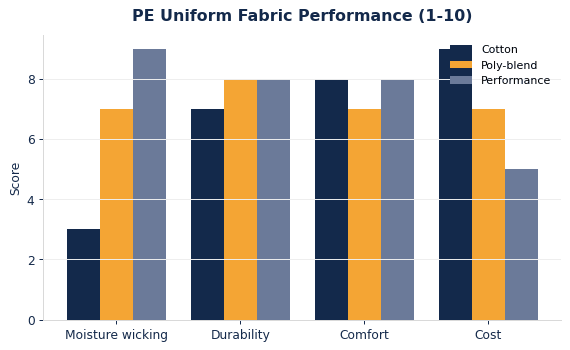
For most programs, a poly-blend is the sweet spot — noticeably better than cotton for active kids without the full premium of performance fabric.
Why wicking matters for active kids
Damp cotton clings, chills, and chafes; a wicking fabric keeps students drier and more comfortable, which helps them stay focused and participate. Quick-drying kits also handle back-to-back classes and light rinsing between wears far better.
Budgeting the upgrade
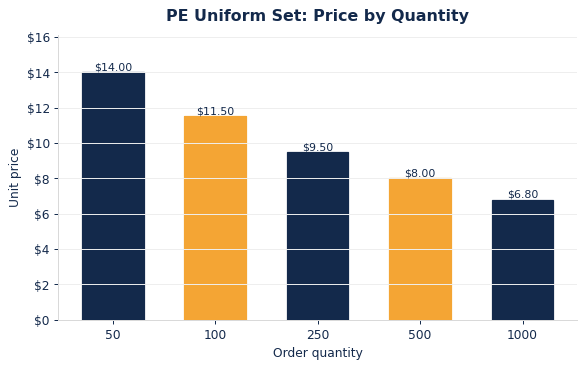
Per-set cost falls with volume, so a program-wide order narrows the gap between cotton and performance. The curve below helps you plan an order and weigh the upgrade.
| Fabric | Wicking | Best for |
|---|---|---|
| Cotton | Low | Tight budgets |
| Poly-blend | Good | Most programs |
| Performance | Best | Hot/outdoor PE |
Working on the design too? See our companion guide, our PE Uniform Color & Design Ideas Schools Approve. Explore our custom PE uniforms or contact us.
How wicking fabric actually works
Moisture-wicking fabric manages sweat through the structure of its fibers rather than by magic. Synthetic fibers like polyester are hydrophobic, so instead of absorbing sweat the way cotton does, they move it along the fibers to the fabric’s outer surface where it spreads out and evaporates quickly. The result is a kit that stays drier against the skin, which keeps active kids cooler and more comfortable through a class. Understanding this is why a performance blend feels so different from a cotton tee after ten minutes of running.
This mechanism also explains the trade-offs. Cotton feels soft and breathable at rest but holds sweat, clings, and dries slowly once kids get moving, which can leave them damp and chilled. A poly-blend improves wicking and durability at a moderate cost, while a full performance fabric maximizes both wicking and quick-dry at a higher price. Matching the fabric to how hard and how hot the class runs is the practical takeaway.
Climate, activity level, and fabric choice
The right fabric depends heavily on where and how the uniform is used. In hot climates or for outdoor PE, moisture-wicking performance fabric earns its premium by managing heat and sweat, directly affecting whether kids stay comfortable and engaged. For mild-climate or lower-intensity programs, a poly-blend is often the sweet spot, delivering noticeably better performance than cotton without the full cost of a performance fabric.
Activity level within the class matters too. Programs with a lot of running, conditioning, or back-to-back periods benefit most from quick-dry fabric, since kids do not get a long break to cool down and a damp cotton shirt becomes a real discomfort. Mapping your climate and typical activity to the fabric options helps you spend where it counts rather than over- or under-investing across the whole program.
Care, durability, and getting value from the upgrade
Performance fabrics reward a little care and reward a program with longevity. Washing in cool water, skipping fabric softener (which can coat fibers and reduce wicking), and air-drying or using low heat keeps the moisture-management properties working wash after wash. Communicating simple care guidance to families protects the investment and keeps the uniforms performing as intended across a season of heavy use.
On value, per-set cost falls with volume, so a program-wide order narrows the price gap between cotton and performance fabric and makes the upgrade more affordable. Choosing durable construction — reinforced seams and quality fabric — means the kit survives frequent washing and active wear, so the higher upfront cost is spread across more wears. For active kids in warm conditions, that comfort and durability usually justify stepping up from basic cotton.
Comfort, fit, and student buy-in
A PE uniform only delivers its benefits if students actually wear it properly, so comfort and fit drive real-world results as much as fabric technology. A moisture-wicking kit that fits well — not too tight, not baggy enough to snag — feels good during activity, and students who feel comfortable participate more fully. Flat seams that reduce chafing and a cut that allows a full range of motion turn the uniform from something kids tolerate into something they do not think about, which is exactly the goal.
Fit consistency across a size range keeps the whole class comfortable. A performance fabric with a little stretch accommodates growing kids and varied body types better than a rigid cotton tee, and offering a sensible youth-to-adult size run means no student is stuck in a poorly fitting kit. When the uniform fits and breathes, the common complaints — too hot, too damp, too restrictive — largely disappear.
Student buy-in also comes from a kit that looks and feels current. A moisture-wicking uniform in the school colors, cut like the activewear kids wear outside school, earns more willing participation than a dated, heavy cotton set. That willingness is a quiet but real benefit of the upgrade, supporting the participation and engagement a PE program is built to encourage.
Common questions about moisture-wicking PE uniforms
How is moisture-wicking fabric different from cotton?
Wicking synthetics move sweat along the fibers to the surface to evaporate, keeping kids drier, while cotton absorbs and holds sweat, clinging and drying slowly. That is why a performance blend feels far more comfortable than a cotton tee once kids are active.
Which fabric is best for a PE program?
For most programs a poly-blend is the sweet spot, noticeably better than cotton without the full premium of performance fabric. In hot climates or for high-intensity outdoor PE, full performance fabric earns its cost by managing heat and sweat.
How do I care for moisture-wicking uniforms?
Wash in cool water, skip fabric softener (which can coat fibers and reduce wicking), and air-dry or use low heat. Sharing this simple guidance with families keeps the wicking properties working across a season of frequent washing.
Is the performance upgrade worth the cost?
For active kids in warm conditions, usually yes — the comfort and quick-dry performance directly affect engagement. Ordering program-wide narrows the price gap with cotton, and durable construction spreads the higher upfront cost across many wears, so the per-wear cost of a performance kit is closer to cotton than the sticker price suggests.
Upgrading your PE kit fabric?
We’ll match moisture-wicking fabric to your climate, activity level, and budget.
Get a Quote