Picking a PE uniform sounds simple until you’re the one ordering for two hundred kids who run, sweat, slide, and grow three sizes a year. A good physical education kit has to breathe, survive the wash a hundred times, fit a huge range of body types, and still look like it belongs to your school. Get it wrong and you’re fielding parent complaints by week three. This guide walks through how schools actually choose a PE uniform—fabric, sizing, and the small details that separate a kit that lasts from one that fades and pills.
What makes a good PE uniform?
A PE uniform isn’t just a branded T-shirt and shorts—it’s workwear for kids in motion. The three things that matter most are comfort during activity, durability through repeated washing, and consistent sizing across a whole grade. A shirt that traps heat, shrinks in the dryer, or itches at the collar will get left at home, and a kit nobody wears defeats the purpose. The best PE uniforms feel light, move with the body, and look identical on the first day and the hundredth.
For schools, there’s a fourth factor: identity. Matching colors and a school logo make it easy for teachers to spot their class on a crowded field, deter kids from skipping out in street clothes, and build a bit of school pride. That’s why most schools standardize on one PE shirt and shorts combination rather than letting students wear whatever they own.
PE uniform fabric: cotton vs polyester vs poly-blend
Fabric is the single biggest decision, because it drives comfort, drying time, and how long the kit survives. Here’s how the three common choices compare for an active environment.
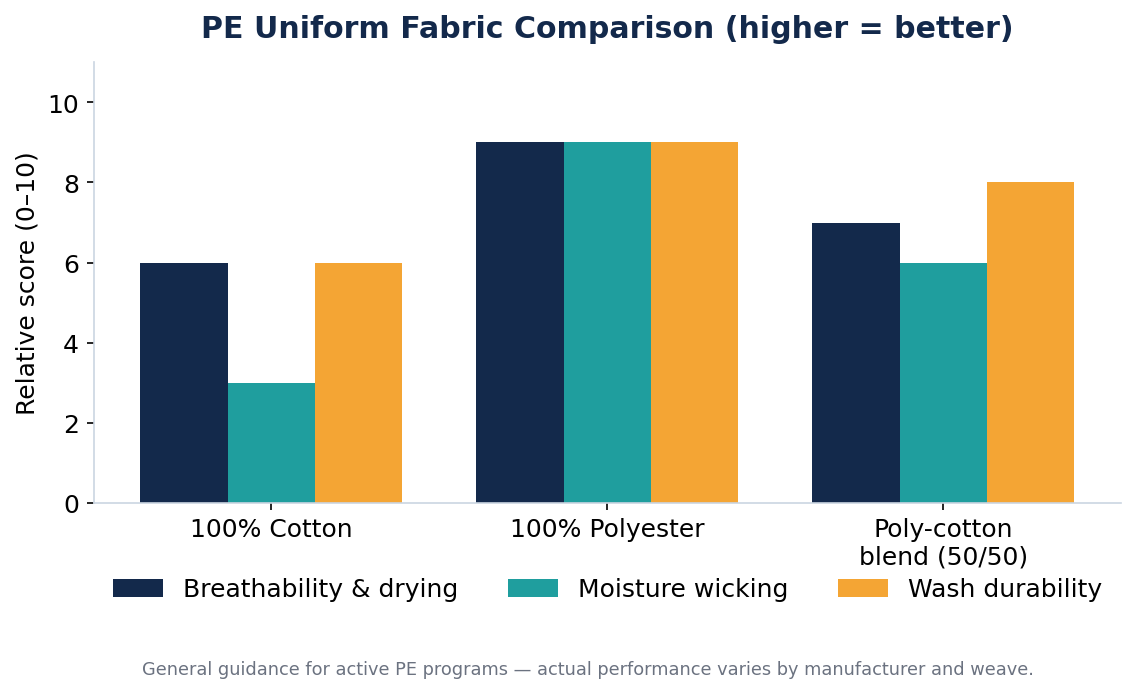
| Fabric | Breathability & drying | Durability | Best for |
|---|---|---|---|
| 100% Cotton | Soft and breathable, but absorbs sweat and dries slowly | Good, but shrinks and fades over time | Low-intensity classes, cooler climates |
| 100% Polyester | Excellent—wicks moisture and dries fast | Excellent—resists shrinking and fading | Most active PE programs and warm climates |
| Poly-cotton blend (50/50) | Good balance of softness and quick drying | Very good—more stable than pure cotton | Schools wanting cotton feel with better wash life |
For a busy program where kids are genuinely active, polyester or a high-polyester blend is usually the right call—it keeps students cooler and the uniform looks newer for longer. If softness against the skin is a priority, a 50/50 blend is a sensible middle ground. You can compare both when you build your school’s PE uniform and choose the fabric that fits your climate and budget.
Sizing a PE uniform for a whole school
The most common ordering mistake isn’t fabric—it’s sizing. Order too few small and large sizes and you’ll be scrambling mid-year. The goal is a size run that covers every body in the building, from the smallest youth size to adult sizes for older students and staff. Most schools find their demand follows a predictable bell curve, with the middle sizes by far the most popular.
| Grade band | Typical PE shirt sizes | Sizing tip |
|---|---|---|
| Elementary (K–5) | Youth XS – Youth L | Order extra Youth M/L; growth is fast |
| Middle school (6–8) | Youth L – Adult M | Widest spread; stock the middle heavily |
| High school (9–12) | Adult S – Adult XXL | Add larger adult sizes and a few staff sizes |
Two habits prevent most sizing headaches. First, use a fit kit—a sample set students can try on before the bulk order locks in. Second, keep a small buffer of the popular middle sizes for new enrollments and replacements. When you order custom, you can specify the exact quantity per size rather than buying fixed prepacks. Need help planning a run? Our companion guide on custom PE uniforms for schools covers bulk ordering in detail.
PE shorts: fit, length, and pockets
Shorts get less attention than shirts but cause just as many complaints. Look for an elastic waistband with an internal drawcord for adjustability, a length that meets your school’s dress code (typically 7–9 inch inseam for most ages), and the same moisture-wicking fabric as the shirt so the kit dries evenly. Skip pockets if you want to discourage phones in class, or add a small one if students need to carry a locker key.
Details that separate a good kit from a great one
- Tagless or printed-in labels—no scratchy neck tags that get cut out and fray.
- Flatlock or reinforced seams—they survive sliding, diving, and repeated washing.
- Fade-resistant printing—screen print or sublimation so the school name stays crisp.
- Color contrast—a shirt color that’s easy to spot from across a field.
- Student names or numbers (optional)—handy for larger schools and easy to add on a custom order.
Pick your fabric, colors, sizing run, and add your school name or logo in minutes—then preview the full kit.
Get a QuoteReady to compare shirt styles and printing options? Read our companion guide to custom PE uniforms for schools, or browse ready-to-personalize kits in our school PE uniform collection.
Frequently asked questions
What is the best fabric for a PE uniform?
For most active PE programs, polyester or a high-polyester blend is best—it wicks sweat, dries quickly, and resists shrinking and fading better than pure cotton. A 50/50 poly-cotton blend is a good option if you want a softer feel with better wash durability than cotton alone.
How do schools choose PE uniform sizes?
Schools plan a size run that spans every grade in the building, from youth sizes up through adult, and stock the middle sizes most heavily because demand follows a bell curve. The most reliable method is to use a fit kit so students try samples on before the bulk order is placed.
Should a PE uniform be cotton or polyester?
Polyester is generally the better choice for an active class because it keeps students cooler and dries fast, while cotton holds moisture and can feel heavy once it’s damp. If softness matters most, choose a poly-cotton blend, which balances comfort and durability.
What should a good PE shirt and shorts include?
A good PE shirt is moisture-wicking, tagless, with reinforced seams and fade-resistant printing of the school name. Matching shorts should have an adjustable elastic waistband, a dress-code-friendly length, and the same quick-dry fabric so the whole kit performs and looks consistent.
Fabric performance and sizing vary by manufacturer and student population. Confirm specs and try a fit kit before placing a bulk order. Last reviewed: 2026.