PE Uniform Fabric Guide: Cotton vs Poly-Blend vs Performance
Ask any PE teacher what makes a uniform program succeed or fail and the answer usually comes down to one thing: the fabric. The right pe uniform fabric holds up to daily activity, survives industrial laundering, keeps students comfortable through a sweaty class, and still looks presentable after a full school year. The wrong one pills, fades, clings, or falls apart by winter break, generating complaints from students, parents, and the budget alike. Choosing well is the single most important decision in outfitting a physical-education program.
This guide compares the three pe uniform fabric options schools actually choose between, cotton, poly-blend, and performance synthetics, on the qualities that matter in a gym: comfort, durability, moisture management, and cost, so you can match the material to how your program really runs.
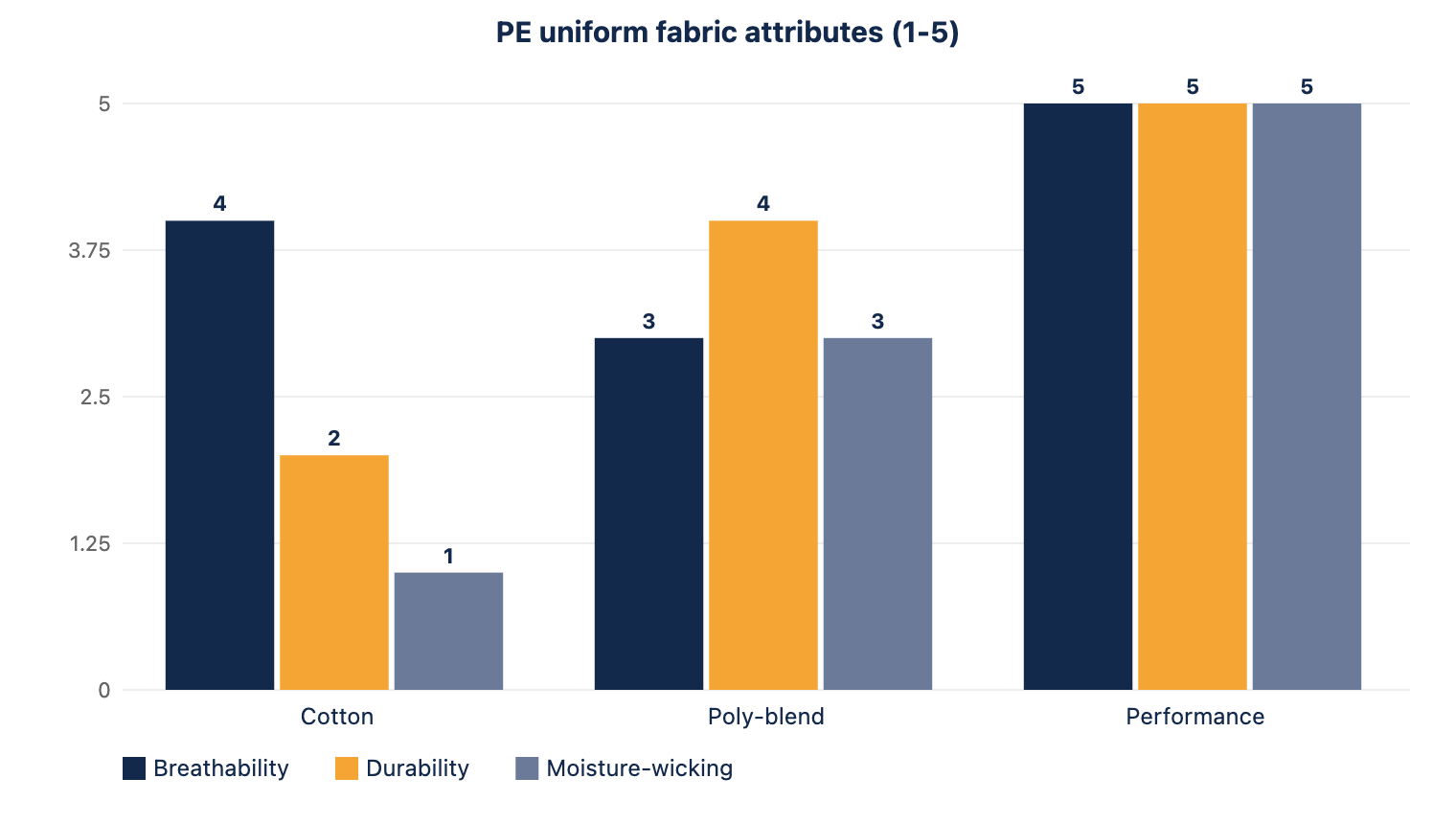
Cotton: comfortable but high-maintenance
Cotton feels soft and breathable, which students like, and it takes screen printing cleanly for a school logo. Its weaknesses show up under the demands of a PE program. Cotton absorbs sweat and holds it, so it gets heavy and stays damp, it shrinks and fades with hot industrial washing, and it wrinkles easily. For a light-activity or younger-grade setting where comfort trumps performance, cotton can work, but it rarely survives heavy daily use as well as its alternatives. Think of pure cotton as the comfort-first, durability-second choice.
Poly-blend: the practical workhorse
A poly-cotton blend, often around a 50/50 or 65/35 split, is the most popular PE uniform fabric for good reason. It keeps some of cotton’s soft feel while adding polyester’s durability, shrink resistance, and faster drying. Blends hold color better through repeated washing, wrinkle less, and cost less over their life because they simply last longer. For most general PE programs balancing comfort, budget, and longevity, a poly-blend is the sensible default, and it is why blends dominate school uniform orders.
Performance synthetics: built for movement
Performance fabrics, typically polyester engineered with moisture-wicking finishes and sometimes a touch of spandex for stretch, are built specifically for athletic activity. They pull sweat away from the skin to the surface where it evaporates, keeping students drier and more comfortable during intense activity. They are lightweight, stretchy, quick-drying, and highly durable. The trade-offs are a higher upfront cost and a more athletic look that some schools reserve for teams. For competitive PE, warm climates, or programs that prioritize student comfort during exertion, performance fabric is worth the premium.
| Fabric | Strength | Weakness | Best for |
|---|---|---|---|
| Cotton | Soft, breathable, cheap | Shrinks, holds sweat | Light activity, young grades |
| Poly-blend | Durable, low-maintenance | Less wicking than performance | General PE programs |
| Performance | Wicking, stretchy, quick-dry | Higher cost | Athletic PE, warm climates |
Durability and cost over time
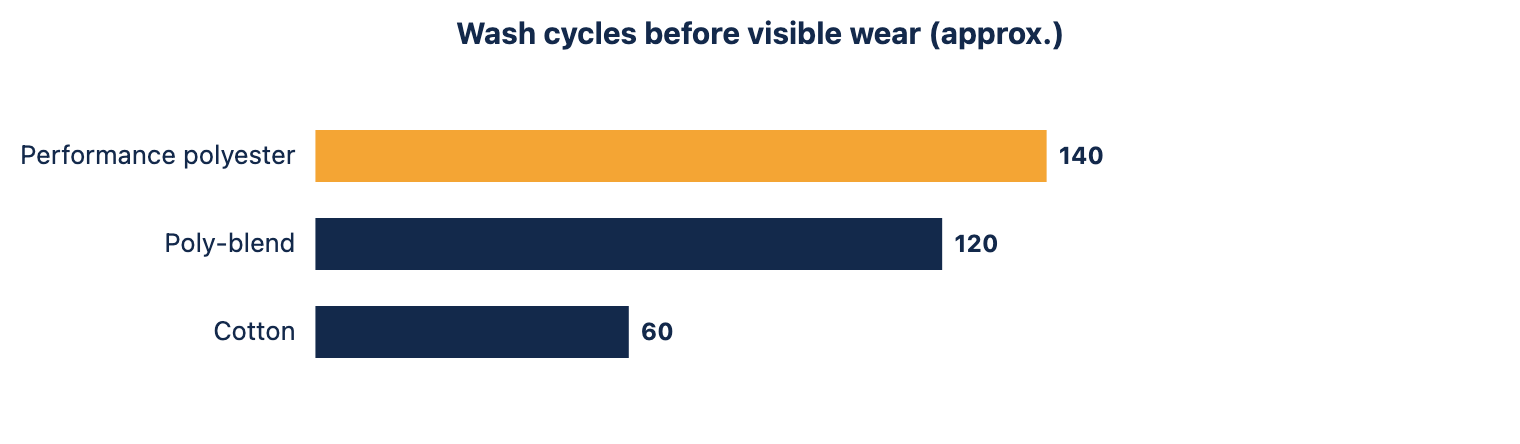
The cheapest uniform is rarely the most economical. A shirt that survives sixty washes before greying costs more per year than one that lasts well past a hundred, once you count replacements and the complaints a shabby uniform generates. Poly-blend and performance fabrics both outlast cotton under the hot, frequent washing PE gear endures, which is why the wash-cycle comparison above matters more than the sticker price. Price a uniform by cost per school year, not by the tag, and the more durable fabrics usually win.
Printing and durability of the logo
Fabric choice also affects how a school logo holds up. Screen printing bonds well to cotton and blends and is economical for large runs, while heat-applied or sublimated logos suit performance polyester and resist cracking through repeated washing. Whatever the fabric, confirm the decoration method is rated for frequent hot laundering, since a logo that peels or fades after a month undermines an otherwise durable garment and makes the whole program look worn.
Weight, weave, and seasonal needs
Beyond the fiber itself, fabric weight and weave shape how a uniform performs. A lighter jersey knit breathes well and suits warm gyms and spring activity, while a slightly heavier weight holds up better to rough use and feels less flimsy on older students. Some programs run a two-piece system, a breathable tee for daily activity plus a heavier fleece or sweatshirt layer for cold-weather or outdoor units, so students stay comfortable year-round. Deciding your seasonal range up front prevents buying a single uniform that is too hot in September and too thin in January.
Color, staining, and appearance over time
Darker and mid-tone colors hide grass stains, sweat marks, and general gym grime far better than pale shades, which is why so many programs favor navy, black, and deep school colors for the bottoms in particular. Polyester and blends also resist staining better than cotton and release dirt more easily in the wash. If school colors include a light shade, consider using it as an accent or on the logo rather than the whole garment, so uniforms still look presentable at the end of a long, active week.
Care instructions that protect your investment
Even the most durable fabric lasts longer with the right care, so include simple laundering guidance when uniforms go home with students. Washing in cool or warm water rather than hot, avoiding high-heat drying that breaks down elastic and finishes, and skipping fabric softener on performance fabrics all extend a uniform’s life noticeably. A small printed care card or a note to families costs nothing and meaningfully reduces the shrinking, fading, and premature wear that generate replacement costs and complaints.
Comfort, fit, and student buy-in
A uniform students dislike gets left at home, so comfort has practical consequences for participation. Breathable, non-clingy fabric, a relaxed but not baggy cut, and colors that hide sweat all improve buy-in. Older students in particular resent anything that feels revealing or uncomfortable during activity, so a slightly more generous, matte performance or blend fabric tends to win cooperation. When students are comfortable, they participate, and participation is the whole point of the program.
Bottom line
The right pe uniform fabric depends on your program: cotton for comfort-first, light-activity settings; poly-blend as the durable, budget-friendly default for general PE; and performance synthetics where wicking and movement matter most. Price by cost per school year, match your logo method to the fabric, and prioritize a comfort level that keeps students participating.
Spec the right PE uniform fabric
Tell us your activity level, climate, and budget and we will recommend a fabric and durable printing for your program.
Get a QuoteHome · About · Buying guides · Companion guide: PE uniform sizing